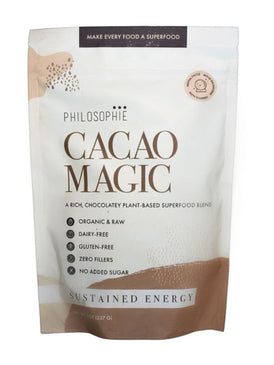

This supportive smoothie is a warm and comforting start to your day with a blend of aromatic chai tea, our energizing and antioxidant-rich Cacao Magic, creamy almond butter, and a sprinkle of warming spices.
Philosophie makes the kind of food that helps keep your body healthy, so you don't have to worry...
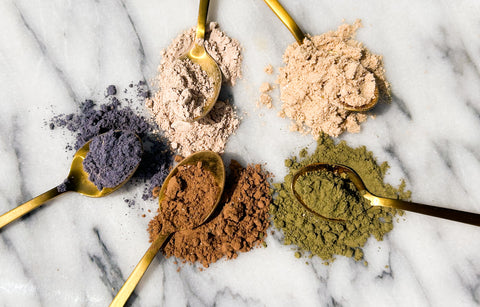
Our products are packed with goodness and love, and that's it. No artificial sweeteners, no preservatives. Nothing.
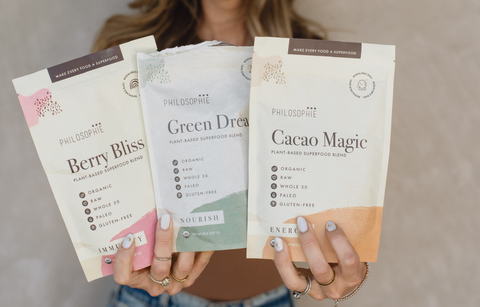
The world's top celebrities (George Clooney anyone?!) and the best moms alive agree - we make adding superfoods to life so easy!
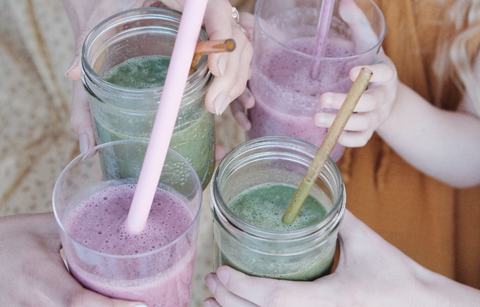
Sophie fills her life with love and our customers feel the love in her products. You get better everything because everything we make is better.
This supportive smoothie is a warm and comforting start to your day with a blend of aromatic chai tea, our energizing and antioxidant-rich Cacao Magic, creamy almond butter, and a sprinkle of warming spices.

This sweet & simple cacao yogurt parfait recipe is rich, creamy, sweet, and satisfying, but it comes with a twist – it's loaded with superfoods.

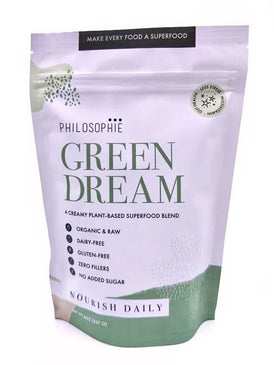
Enjoy this vegan cobb salad, we combined a savory take on coconut chips and a homemade Green Dream honey maple mayo dressing that’s a little bit sweet & savory.

Re-create this Pumpkin Chai Latte the Philosophie way with superfood blends, adaptogens and healing fall spices.

We’re enjoying ALL the cozy flavors of fall because pumpkin spice season is here, and what better way to embrace it than by baking a batch of delectable pumpkin muffins? Get the full recipe in this post!

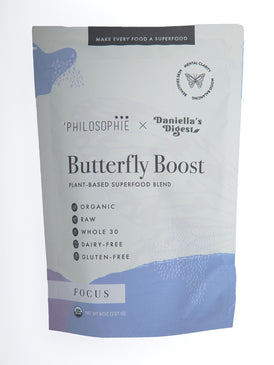
Enjoy this beautiful bowl made with homemade Butterfly Boost cashew butter and topped with blueberries, nut butter and supercharged raw honey.